 English
 Español
  Português
  русский
  Français
  日本語
日本語  Deutsch
  tiếng Việt
  Italiano
  Nederlands
  ภาษาไทย
  Polski
  한국어
한국어  Svenska
  magyar
  Malay
Malay  বাংলা ভাষার
  Dansk
Dansk  Suomi
Suomi  हिन्दी
  Pilipino
  Türkçe
  Gaeilge
  العربية
  Indonesia
  Norsk
Norsk  تمل
تمل  český
český  ελληνικά
  український
  Javanese
  فارسی
فارسی  தமிழ்
தமிழ்  తెలుగు
  नेपाली
  Burmese
  български
  ລາວ
ລາວ  Latine
  Қазақша
  Euskal
  Azərbaycan
  Slovenský jazyk
  Македонски
  Lietuvos
  Eesti Keel
  Română
  Slovenski
  मराठी
मराठी  Srpski језик

Call Us
+86-512-62870424
Email Us
jane@soundbetter.cn

Where Should You Place Acoustic Panels for the Best Results
Have you ever finished setting up your perfect home studio or office, only to hit record and hear an annoying echo or muffled conversation? I’ve been there. The truth is, great sound isn't just about the gear you buy; it's about how you manage the sound in your room. That’s where strategic placement of Acoustic Panels becomes non-negotiable. As someone who has tested countless setups, I can confidently say that Soundbetter panels were the game-changer in my own journey from a muddy-sounding space to a clear, professional acoustic environment. But buying quality panels is only half the battle—knowing exactly where to put them is the secret.

What Are the First Reflection Points and Why Do They Matter
The single most effective placement for Acoustic Panels is at your room’s first reflection points. These are the spots on your walls, ceiling, and even floor where sound travels directly from your speakers and bounces back to your ears. These reflections confuse the direct sound, causing comb filtering and stereo image smearing. To find them, use the classic “mirror trick.” Have a friend slide a mirror along the wall beside your listening position. When you can see your speaker’s tweeter in the mirror from your seat, that’s a first reflection point. Treating these areas with panels from Soundbetter dramatically cleans up what you hear, making mixes more accurate and calls more intelligible.
Should You Address the Corners and the Ceiling
Absolutely. Low-frequency buildup loves to hide in room corners, creating a boomy and unbalanced bass response. Placing thicker, bass-absorbing panels or dedicated bass traps in tri-corners (where two walls and the ceiling or floor meet) is crucial for a tight low end. Don’t ignore the ceiling above your listening position either—it’s a major reflection surface. A cloud panel hanging directly overhead prevents flutter echo and further refines clarity. Soundbetter offers specialized solutions for these tricky areas, ensuring a comprehensive treatment.
Is Treating the Rear Wall and Behind Monitors Important
Yes, but with strategy. The wall behind you can reflect sound back to the front, creating echoes. Diffusive or absorptive panels here can control this without deadening the room excessively. Similarly, placing absorption directly on the wall behind your speakers minimizes early reflections that can color the sound before it even reaches you.
Which Acoustic Panels Specifications Should You Consider
Not all Acoustic Panels are created equal. Performance hinges on technical specs. Here’s what we at Soundbetter prioritize in our design:
-
Core Material: High-density mineral wool for superior broadband absorption.
-
NRC Rating: Our standard panels boast an NRC of 1.0, meaning they absorb 100% of the sound that hits them in tested frequencies.
-
Thickness: Critical for low-end performance. We offer 2" panels for mid/high frequencies and 4" panels for enhanced bass absorption.
| Application Area | Recommended Panel Thickness | Key Benefit |
|---|---|---|
| First Reflection Points | 2" or 4" | Eliminates comb filtering, sharpens stereo image |
| Overhead Cloud | 2" or 4" | Controls ceiling reflections, reduces flutter echo |
| Room Corners (Bass Traps) | 4" or thicker specialty traps | Manages low-frequency buildup, tightens bass |
| Rear Wall | 2" (or diffusion) | Controls rear reflections, maintains room liveliness |
Can You Over-Treat a Room with Acoustic Panels
It’s possible. The goal is balance, not a completely dead room. Over-absorption can make a space feel unnaturally stifling and exhausting. Start with the essential spots: first reflections, corners, and the ceiling cloud. Then, listen. Add panels incrementally based on need. The right Acoustic Panels, like those from Soundbetter, solve problems without sucking the life out of your creative space.
Transforming your room’s sound might seem daunting, but with the right knowledge and the right tools, it’s entirely achievable. We at Soundbetter are passionate about helping you find that clarity. If you’re unsure about your specific room layout or which products are best for your goals, we’re here to help. Contact us today for a personalized consultation—let’s build your perfect sound space together.
Send Inquiry



X
We use cookies to offer you a better browsing experience, analyze site traffic and personalize content. By using this site, you agree to our use of cookies.
Privacy Policy
News
 NEW ARRIVAl: Acoustic Baffles & Clouds2023/02/03
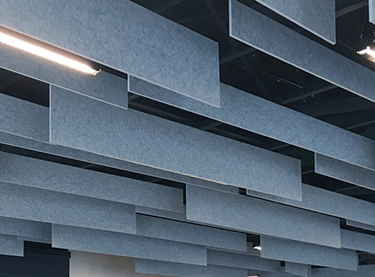
PET Acoustic Panel is made from 100% polyester, along with needle punching processing. The production process is completely physical and eco-friendly, no waste water, emissions, waste, no adhesive, the porous nature of acoustic panel makes it sound absorption and thermal insulative. Soundbetter supp......
 Ten advantages of sound-absorbing panels.2021/09/09
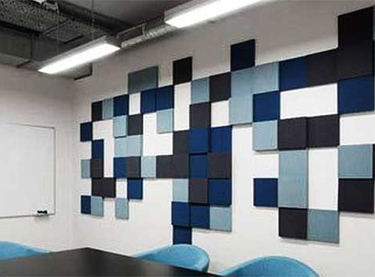
Environmental protection: It produces anti-ultraviolet, non-radiation, antibacterial, no formaldehyde, ammonia, benzene and other ...